Extraordinary wildlife moments often begin with ordinary routines: a heron assessing shallow water, a deer browsing along a woodland edge, or a fox pausing before crossing open ground. Understanding those routines helps you anticipate a photograph without manufacturing the event. It also makes changes in behaviour easier to notice. Observation is not a technique for earning a closer approach; it is a way to recognise when your presence may be costing an animal time or energy.
Establish a baseline from a distance
Stop at a permitted viewpoint before raising the camera. Watch through binoculars if you have them, keeping your movements slow and predictable. Notice whether the animal is feeding, resting, travelling or interacting with others. Look at the surroundings as well: nearby cover, other visitors, livestock, vehicles and changing weather may all influence what happens next.
There is no universal waiting period that proves an animal is comfortable. Some species freeze when threatened, and an apparently still individual may be highly alert. Compare several observations rather than relying on a single posture. If the animal was already watching you when you arrived, you may not have seen its undisturbed baseline at all.
Read a sequence, not an isolated signal
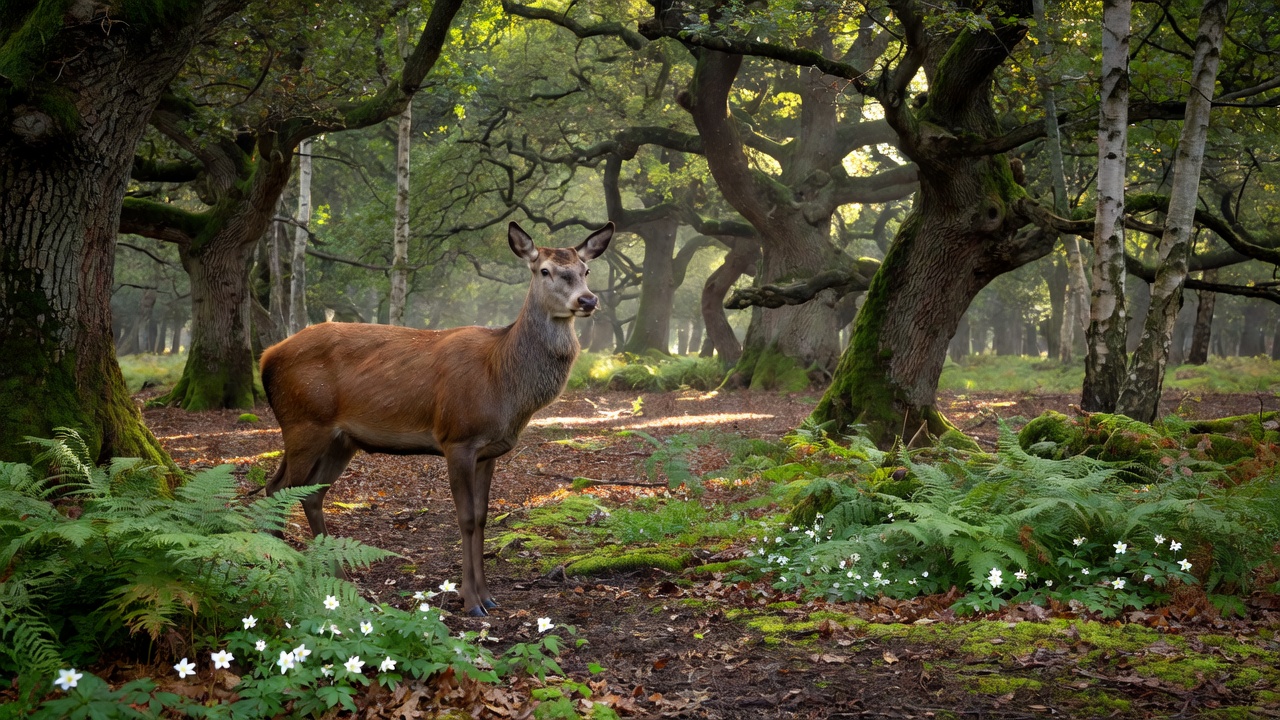
A raised head may follow a sound from anywhere in the landscape. Repeated head lifts, interrupted feeding and movement away as you advance form a more concerning sequence. Birds may stop provisioning young, call repeatedly or circle without landing. A mammal may place itself between you and its young. These observations are reasons to create more space, not invitations to test the animal’s tolerance.
Do not wait for a dramatic response. Flight is not the only sign of disturbance, and the absence of flight is not consent. A bird remaining on a nest may be protecting eggs rather than accepting your proximity. If you cannot confidently distinguish curiosity from vigilance, choose the more cautious interpretation and withdraw without blocking a route to safety.
Anticipate without provoking
Learn natural movement patterns from a fixed, authorised position. A wading bird may repeatedly work the same stretch of shoreline; a grazing group may move gradually with the vegetation. Compose with space in the likely direction of travel and prepare focus settings while the subject is still distant. Do not cut across its path to force a preferred angle.
Playback, squeaking, throwing objects and moving vegetation can all produce a response, but a response is not a neutral photographic opportunity. Likewise, food can change an animal’s priorities and draw it toward danger. Let the behaviour unfold without your intervention. If the animal moves out of sight, the encounter may simply be finished.
Keep interpretation proportionate
Jane Goodall’s work at Gombe and Niko Tinbergen’s studies of animal behaviour remind us that careful observation and repeated evidence matter. A brief visit does not give a photographer the same understanding as long-term research. Avoid captions that confidently label an animal as grateful, angry or posing when the photograph cannot establish that state.
A useful fieldnote separates observation from inference. Write “the bird left the branch after three walkers approached” rather than “the bird disliked people.” Record the broad habitat, weather, your position and the sequence of events. Leave precise coordinates out of notes intended for public sharing when the species or site is sensitive.
Know when to end the encounter
Finish before repeated disturbance becomes a pattern. Lower your camera, increase distance calmly and avoid sudden movements. If an animal approaches you, do not reward the approach with food or reach toward it. Follow the land manager’s species-specific guidance; a large mammal approaching a vehicle requires different decisions from a small bird moving along a hedge.
Afterward, review both photographs and choices. Did you stop photographing when feeding stopped? Did your position leave an escape route? Did other photographers copy your approach? A successful session can include a distant, imperfect image—or no image—when the animal continued its day without your involvement.
Next, connect your observations to distance-aware camera technique and a practical animal-welfare decision process.